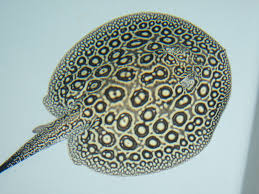
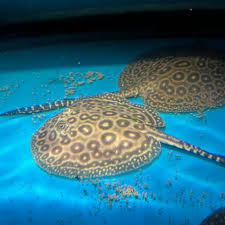
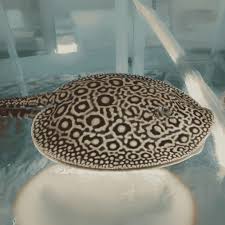
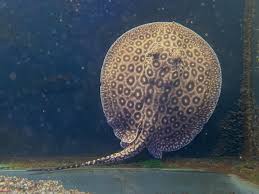
Pearl Stingray (Potamotrygon henlei)
Total: $349
Why Buy From Imperial Dragon Arowana?
On orders $500+
100% DOA coverage
Quarantined & disease-free
Lifetime advice
We Ship Pearl Stingray Nationwide
🔍 Searching for "Pearl Stingray for sale near me"? We ship to your door with live arrival guarantee!
About the Pearl Stingray
The Pearl Stingray (Potamotrygon henlei) is a stunning freshwater stingray native to the Rio Xingu and Rio Tocantins basins in Brazil. It is closely related to the Leopoldi stingray but is distinguished by its unique pattern of large, pearl-like spots on a dark background. Henlei are highly prized in the aquarium trade for their beauty, relative hardiness, and active nature. They are a favorite among stingray enthusiasts.
Appearance
Pearl Stingrays have a round, flat disc with a base color ranging from dark brown to deep black. The disc is covered in large, irregular, pearl-like spots that are typically bright white or cream. These spots are often surrounded by a darker ring, creating a three-dimensional effect. The pattern is unique to each individual. The ventral side is usually white. They have a moderately long tail with one or more venomous spines. Compared to Leopoldi, Henlei spots are generally larger and more irregular.
Size & Growth
Pearl Stingrays can reach a disc diameter of 20-24 inches, with females typically larger than males. They are active growers and require a spacious aquarium. With proper care, they can live 15-20 years.
Tank Requirements
A minimum tank size of 300 gallons is recommended for a single adult Pearl Stingray. The tank should be wide and long (at least 8' x 3') to provide ample floor space. Soft, sandy substrate is essential to protect their undersides. Strong filtration and high water flow are necessary due to their high waste production. Regular water changes (30-50% weekly) are crucial. Water parameters: temperature 78-86°F, pH 6.0-7.5, soft to moderately hard water. They are sensitive to poor water quality.
Diet
Pearl Stingrays are carnivores and need a protein-rich diet: live or frozen earthworms, blackworms, bloodworms, shrimp, small fish, high-quality sinking carnivore pellets, and chopped seafood like squid, mussels, and fish fillets. Variety is key for health and maintaining their vibrant spots.
Compatibility
Pearl Stingrays are generally peaceful but will eat any fish that fits in their mouth. Suitable tank mates include arowanas, large catfish (e.g., Plecos, Tigrinus), larger cichlids, and other stingrays if the tank is large enough. Avoid small fish, aggressive fish, and fin-nippers.
Pearl vs. Leopoldi
Pearl (Henlei) and Leopoldi are often confused. Key differences: Henlei spots are larger, more irregular, and pearl-like, while Leopoldi spots are smaller, more uniform, and often arranged in concentric rings. Henlei also tend to have a more elongated disc shape compared to the rounder Leopoldi. Both are stunning and highly sought after.
📞 Call 520-809-7055 for current availability and pricing.